Author Archives: Lucy

Talking about Climate Change

Why is talking about climate change so difficult?  Aside from the deep feelings of fear, anger and confusion which can arise, it can be hard to sustain an in depth conversation on the subject.

.IMG_0485

I highly recommend this brilliant guide by the climate change charity 10:10 on how to have a productive climate change conversation. “Not just a passing mention: a real conversation – a rich, lively exchange of stories and ideas, hopes and fears, convictions, predictions and interpretations”

Reading this guide helped me to understand why climate change conversations can be difficult and how to change this. Often once you start talking about climate change, you  find yourself as the designated ‘Climate Person’  in your social group and then you feel as though you should have all the answers.  In the 10:10 guide, they discuss how to be a climate change ‘moderator’ and channel ideas and discussions, by following a three point guide.

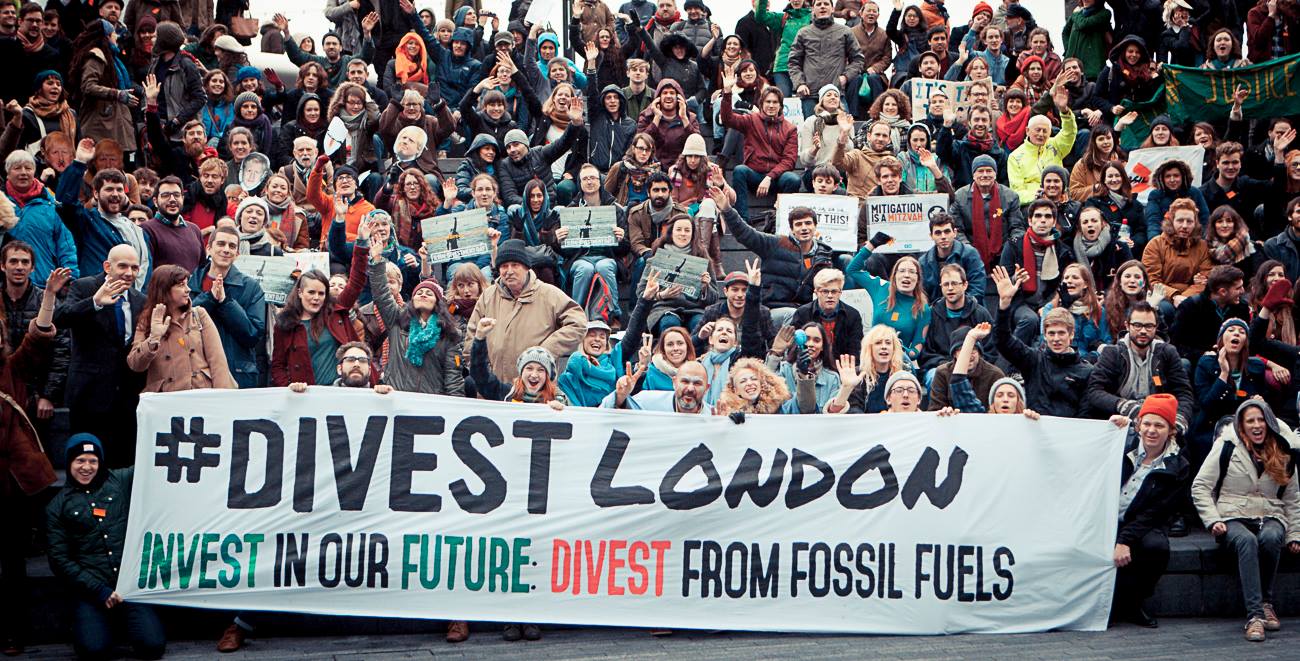
I’ve found it much easier to talk about climate change since I joined Divest London and started campaigning actively for fossil fuel divestment, both in London and in my local borough Camden.  In these groups we discuss climate change and potential solutions quite openly.  When friends ask what I’ve been doing recently and I mention the fossil fuel divestment campaign, it’s an effective way to bring it into the conversation.

One of the reasons I started this blog was to promote a way of discussing climate change and other issues affecting our children’s future.  So often when you discuss environmental problems it seems that you are being negative and people instinctively want to avoid this.  But actually a love of our planet and a wish to secure a sustainable future is the ultimate expression of a positive, engaged life.

Even with writing this blog and campaigning, I still find it hard to introduce the subject into certain conversations, particularly at more festive occasions or gathering.  For example last Saturday I was at my friend’s beautiful wedding and chatting away to another guest who I had only met a couple of times.  The subject happened to come round to climate change and for some reason I momentarily froze.  Then I gave myself a moment and thought, why don’t I mention my blog and continue the discussion?  So I did and we ended up having a really good chat.  Still it was interesting to note the instinct to change the subject, however much we care about the issue.

There are a few new books which discuss climate change conversations further.  Don’t Even Think About it by George Marshall and In time for tomorrow?  The carbon conversations handbook by Rosemary Randall and Andy Brown.

Neil Young, Monsanto and Musical Inspiration

I woke up this morning with Rock Star Bucks a Coffee Shop, by Neil Young, playing in my mind. I haven’t been able to get it out of my head since I first heard it on Steve Lamacq’s Roundtable show on 6 Music last Thursday, when I watched my son bob along happily in his high chair to the catchy chorus, ‘Monsanto, let the farmers grow.’

Neil Young sings about Monsanto bringing a lawsuit after ‘the People of Vermont voted to label food with GMOs’. He criticises both Monsanto and Starbucks for lobbying against a landmark law due to be introduced by the state next year which requires all GMO food products to be labelled.

After the song had played in my head for a couple of days, I was struck by Neil Young’s genius (once again!). It doesn’t matter whether you like the tune or not – you can’t stop humming it. If everyone listening to it keeps singing ‘Monsanto, let the farmers grow,’ more and more people will stop and think about those lines. And the humorous title is brilliant.

I listened to it again, and I watched the video and I noticed how much fun the musicians are having, tossing away Starbucks cups and fooling around. Above all, I realised how poignant the song is. The line ‘Mothers want to know, what they feed their children’ brought tears to my eyes because that is exactly how I feel. It is a tongue-in-cheek rock song but it has a deeply serious message.

So I agree with Tom Robinson, one of the judges on Radio 6 Music last week and I rate it 10/10. This is the first release from the album The Monsanto Years and I look forward to hearing the others.

On the campaign side, I’m supporting this great petition against Monsanto from Avaaz – https://secure.avaaz.org/en/monsanto_dont_silence_science_loc/?slideshow

S.O.S. – Save Our Soil

Last week, I attended a thought-provoking discussion on soil, organised by Dartmouth Park Talks, in association with the Chelsea Fringe festival. Settling down for the discussion, held in a local pub, I quickly realised that the state of our planet’s soil has huge implications for our children’s future.

2015 is the year of the soil and one of our most precious resources is under threat.    With current usage, the UN predicts that we only have 60 years of crop growing left.   George Monbiot’s article, ‘treating soil like dirt‘ describes the issue in urgent detail.

IMG_0725

In sixty years time, my son will be sixty one, the time when he should be enjoying imminent retirement and I hope to be enjoying my early nineties.  I must admit, before the talk I rarely thought about soil or gardening, even though I like buying organic food.  From now on, I plan to pay this issue more attention.

Debbie Bourne, author of Gardening in High Heels, brought the subject immediately to life.  She handed round different ‘cocktails’ of soil for us to sample. I pondered how long it had been since I truly got my hands dirty (aside from washing the mud off our weekly vegetable delivery).

Debbie’s talk was followed by an engaging presentation from Henrietta and Bridget of The Land Gardeners. They put the plight of soil into urgent perspective, showing a haunting film, narrated by Edward Norton (natureisspeaking.org) and then memorably dividing up an apple to demonstrate how little we have left.  If an apple represents the planet, just a tiny strip of peel represents productive soil, and this small area is under attack following years of misuse.

John Twyford, a farmer from Tablehurst and Plaw Hatch farm gave a compelling argument in favour of a biodynamic farming approach.  He also addressed the importance of community involvement.  For instance, Plaw Hatch Farm is actively supported by 700 local shareholders. We were invited to consider, as Londoners, how we can support rural farming and benefit our own urban lives.  Ruth Pavey, a local gardening editor and Howard Sooley, a biodynamic gardener were also part of the panel and engaged in vibrant discussions with the audience.

The debate brought home a fundamental truth; we are all dependent on nature.  While we may prefer to ignore soil, seeing it as unglamorous or ‘other’, we cannot sustain our existence without it.

There are sources of hope to inspire us going forward. Henrietta talked about how we can revitalise our soil with sustained care, attention and effort and recommended a film called Symphony of the Soil.

I left with a copy of Debbie’s entertaining book.  She interweaves a year of gardening tips into a light hearted yet passionate story. I’m going to start with trying rocket – this is what Debbie recommends for a beginner starting in June.  The title appeals to me, as someone who embraces environmental justice, while also appreciating a beautifully designed pair of shoes.

IMG_0515

My talents do not currently lie in gardening but the state of our soil is an issue we all need to address, whether by adapting our own gardens (personal or community ones), using our purchasing power, or by putting pressure on policy makers. To start with, it’s an issue we need to talk about and lively community events are an excellent way to begin this conversation.

2015 – Goodbye to disposables!

Happy New Year to all readers!

It may be unusual, but January is one of my favourite months.  My birthday falls at the end, I met my husband on a cold winter night and one year later, we got engaged.  Personal milestones aside, I enjoy welcoming in the New Year and making plans.

My resolution this year is to stop using disposable items, in particular plastic bags, take away cups and bottles. The terrifying scale of the plastic material gathering in our oceans was unveiled for the first time last year. (www.theguardian.com/…/full-scale-plastic-worlds-oceans-revealed-first-time- pollution) Continue reading

Coming from Gratitude

IMG_0485

The quiet days between Christmas and the New Year are a special time.  If we’re fortunate enough to have a holiday, they give us space to relax with our loved ones, enjoy long winter walks followed by hot chocolate or mulled wine and curl up by the fireside with a brilliant novel or a classic film. These sleepy moments also allow us to focus on the past year and what we are most grateful for.

This week I have been reading Active Hope by Joanna Macy and Chris Johnstone.  In this inspiring book, the authors discuss ‘coming from gratitude’ as a profound motivation for environmental activism. By focusing on what we love about the Earth, we develop a positive outlook which in turn, helps us to build the strength we need to protect our planet. Continue reading

Seasonal Joy

Aidan Christmas 2

“The ability to simplify means to eliminate the unnecessary so that the necessary may speak.” Hans Hofmann

I love these words and find them endlessly inspiring. They seem particularly relevant when thinking about the festive season.

I am really looking forward to our first family Christmas with Aidan and I recently signed up to the One million women no waste festive challenge (http://www.1millionwomen.com.au/2014/11/04/no-waste-festive-season/). This inspiring challenge requires us to reduce food waste, enjoy moments not things, avoid over packaging, shop locally and create DIY gifts. Although these steps may seem small, collectively they have a huge impact on preserving resources and tackling climate change.

My favourite item on the list is to enjoy moments not things. I can’t remember what I received as a gift five years ago, but I remember it was the first special Christmas with my husband Nick. Last Christmas I have happy memories of being nearly four months pregnant. I spent several relaxing days reading by the fire, walking on the beach, feeling Aidan’s first kicks and indulging a few pregnant cravings!

It feels natural to reduce food waste, avoid packaging and shop locally for food during the the year and I want to commit to these values at Christmas. Some of the measures I’m taking for the challenge include: reusing old wrapping paper; avoiding over packaged items such as Christmas crackers, planning each meal in advance to eliminate food waste, and not buying excess items, such as Christmas cake, that we don’t particularly like but feel compelled to have for the festive season.

The only task from the list which I find difficult is making DIY gifts as I’m not naturally drawn to crafting. With looking after Aidan, writing and campaigning, choosing to make Christmas gifts could defeat my purpose of creating a relaxing family Christmas! As an alternative, I have chosen ethically sourced gifts and charity gift cards.

Reflecting on the project, I question if it is really a ‘challenge’ or actually a positive release from some of the superficial pressures of consumerism. The commercial build up to the festive season loudly promotes a time of shopping, frenzied gift buying and hectic plans. Yet for most of us, our ideal Christmas involves time (ideally peaceful!) with loved ones, space to relax, good music and delicious food. Whether we choose to celebrate the original meaning of Christmas or not, we can all benefit from time and space for our own spiritual reflection.

By eliminating the unnecessary, we can enjoy a joyful Christmas, mindful of what is really important: our family, friends and the health of our beautiful planet.

Owning our Fear

IMG00082-20100925-1418

A couple of nights ago, listening to Aidan snore lightly in his cot, my mind began to race with fears about the future.   I was tired, hoping for an early night before a busy weekend, yet sleep eluded me.

Dramatic images of extreme weather, food shortages and chaos flooded my mind. My stomach churned with anxiety. Worst of all, I knew my worries wouldn’t be gone in the morning or be eased by nighttime tricks such as camomile tea.

I was so restless, I woke up my poor husband!  Luckily he was sympathetic.  As an environmental lawyer, he has had to confront similar concerns himself whilst battling with climate change legislation. Sleepily he admitted that he had hidden his own fears from me as he didn’t want to scare me!

He gave me a useful piece of advice which I have been thinking about over the weekend; the trick of owning our fear.   This practice involves fully confronting our fears in order to learn from them and move towards positive action, as taught by the influential environmental activist and author, Joanna Macy. Naomi Klein also urges us to face our fears in her persuasive book about climate change, politics and parenthood – This Changes Everything.

Sleep finally won and when I was allowed to sleep until almost 7.30 (a great result!) I did feel a bit better.  I’m sure I will have many more restless nights but facing my worries has made me even more determined to become actively involved.  I want to help avoid those dramatic images from being realised.

I have been researching campaigns during Aidan’s naps this week and I keep uncovering exciting ideas.  To pick one example from many, I discovered a Australian group called 1million women (onemillionwomen.com.au) which encourages women to campaign for action on climate change.  I was really impressed by this model for inspiring action.

Please let me know if you have ideas or campaigns which we could discuss here.  Let’s truly own our climate fears and move towards positive action!


Love the planet…divest!

fossil free

Divest London held an exciting meeting at SOAS University on Thursday night to plan London’s action for the Global Divestment day on February 14.  I’ve just joined the group and it was a brilliant evening!

The divestment movement aims to remove the fossil fuel industry’s social license. Here’s what we all need to know:  fossil fuel corporations have five times more oil, coal and gas in reserve than we can safely burn. The overwhelming majority of climate scientists agree that we have to keep 80% of these fossil fuels in the ground to avoid disastrous climate change. These figures are staggering.  By encouraging public institutions to withdraw their money from the industry, we make a moral statement and encourage investment in the renewables sector.

The ‘gofossilfree’ divestment campaign is raising public awareness across the globe and gaining serious momentum.  Universities, places of worship, councils and pension funds have all been targeted and there have been real victories: Glasgow University is the first European university to divest, Oxford is the first UK council to vote to divest and KLP, Norway’s largest pension fund, is divesting from coal.  Go to gofossilfree.org for more information and updates.  Sign up!

Back to London, the meeting on Thursday was packed when I arrived.   Energy surged around the room as we planned an exciting day of action.  It was heartening to be surrounded by so many intelligent, committed people all campaigning for change.

I missed evening cuddles with Aidan but on a personal note, no matter what I do, fate always seems to send me to the vicinity of Russell Square for life-changing events! I met my husband at the College of Law on Store street, my first job was at a literary agency in Bloomsbury, Aidan was born at University College Hospital and now I find myself in SOAS campaigning for his future. Clearly my involvement is meant to be!